Crash course in speaking Lithuanian
- Taip / Yes
- Ne / No
- Ačiū / Thank you
- Prašau / Please / Here you are
- Labas / Hi / Hello – informal greeting or farewell.
- Laba diena / Good afternoon - standard daytime greeting.
- Labas rytas / Good morning – formal morning greeting.
- Labas vakaras / Good evening – formal evening greeting.
- Labanakt / Good night – used both formally and informally.
- Kaip sekasi? / How are you? – usually follows a greeting; detailed answers are uncommon.
- Į sveikatą / Cheers / Bless you – used when toasting or after someone sneezes.
- Nekalbu lietuviškai / I don't speak Lithuanian.
- Nesuprantu / I don't understand.
- Atsiprašau / Atleiskite / I'm sorry / Excuse me.
- Kiek tai kainuoja? / How much is it?
- Kas tai yra? / What is it?
- Nėra už ką / Prašom / You're welcome / Don't mention it.
Moving around the city
Public transportation
Kaunas has an extensive bus and trolleybus network covering the entire city. Most routes operate from 05:00 to 23:00. After this time, some routes run night buses, usually only on the main lines.
Tickets (valid for both buses and trolleybuses) can be purchased via a mobile app:
 Žiogas is the most popular app used in Kaunas, allowing you to buy and activate tickets via smartphone. Tickets can be validated by scanning a QR code or entering the three-digit vehicle number. Once installed, the app is easy to set up and top up.
Download: Google Play store / App Store
There is also an option to purchase a ticket without contactless payment: starting from August 2025, Kaunas introduced the ability to pay for public transport using contactless MasterCard or VISA bank cards. This ticket costs €1.00, is valid for one passenger until the end of the route. No discounts apply, transfers within 30 minutes are not allowed, and only one ticket per card can be purchased.
Useful notes:
- Many buses and trolleybuses have screens displaying stops, usually in both Lithuanian and English.
- The city center and main tourist attractions are easily accessible by public transport.
Rent a bike
In Kaunas, it is possible to rent bicycles for city rides. Here is the most popular rental point:
Dviratinis
P. Kalpoko St. 41, Kaunas
Phone: +370 675 72122
Email:
Opening hours:
- Monday–Friday: 10:00–19:00
- Saturday: 10:00–13:00
- Sunday: Closed
Before renting, it is recommended to contact the rental point to check bicycle availability and possible reservations.
Get a taxi
Taxis in Kaunas are easily available, especially in the city center, and prices are not very high. The flag fall / call-out fee is around €1.50–2.00 (depending on the company). The price per kilometer is about €0.80–1.50. Prices are slightly higher at night (10:00 PM–6:00 AM).
Booking: It is best to order a taxi through the mobile app Bolt. You can also hail a taxi on the street, but booking via the app is often more convenient and provides clearer pricing.
Exploring Kaunas on your own
In Lithuania, museums offer free admission on the last Sunday of the month. We invite you to take advantage of this opportunity by coming to Kaunas at least one day earlier and visiting the museums for free on Sunday, May 31. More information here.
With all the pre-conference meetings, conference sessions, welcome reception, football game, social tours and conference dinner, there is little time to explore Kaunas and the surrounding area. However, if you feel like exploring, here are few suggested things to see and do (aside from the social tours).
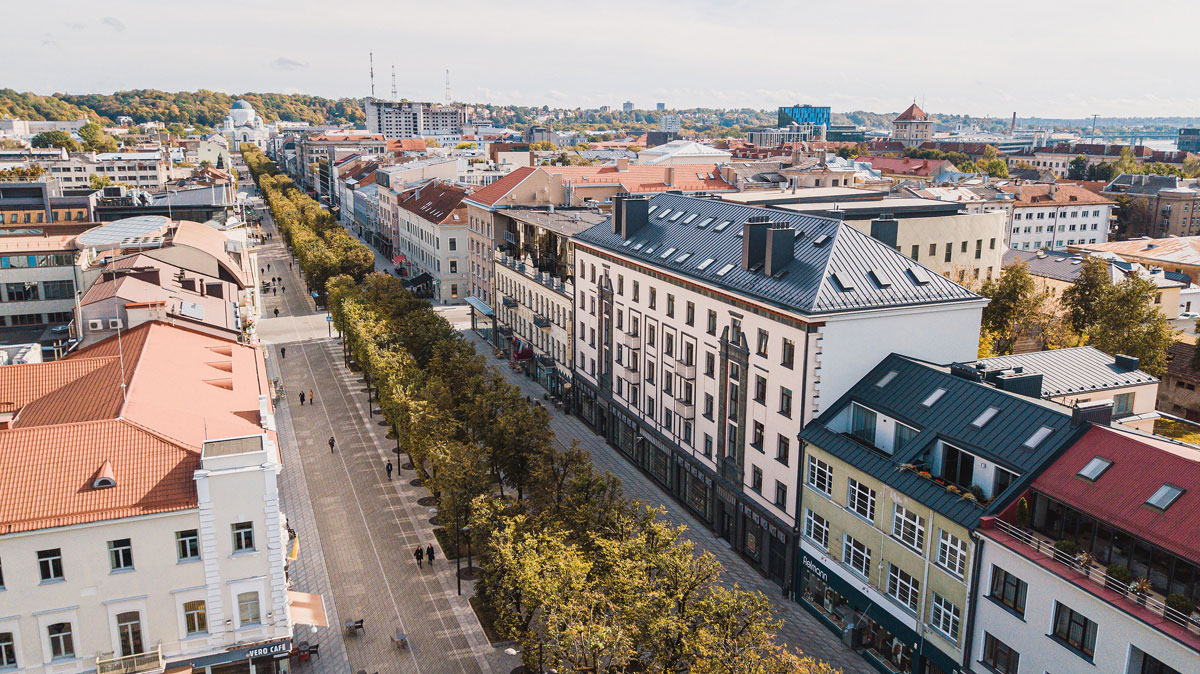 Photo by Kaunas City Municipality
Laisvės Avenue
Laisvės alėja, Kaunas
The main pedestrian street of the city, featuring numerous shops, cafés, restaurants, and cultural sites.
Open 24/7.

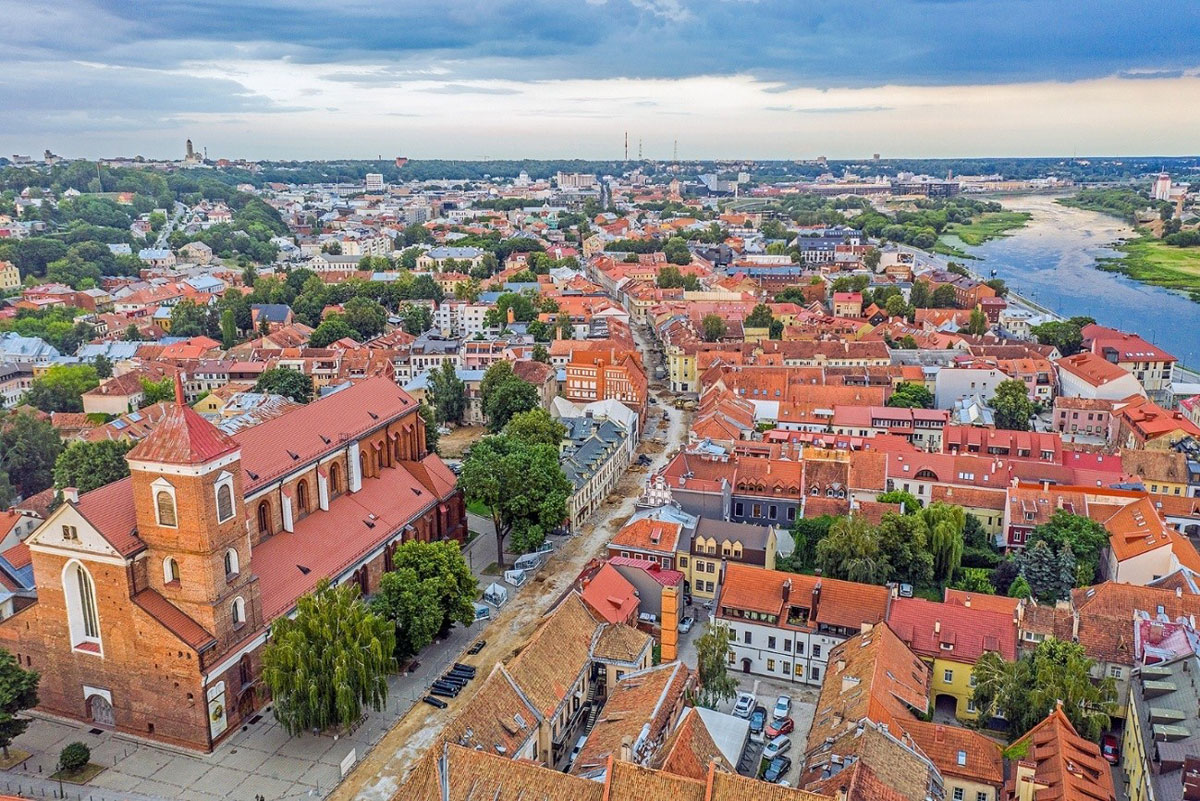
Nuotrauka iš interneto platybių
Kaunas Old Town
Rotušės ave., Kaunas
The historic city center with the Town Hall, narrow streets, cafés, and markets – a great place for a stroll and to soak up the Old Town atmosphere.
Open 24/7.
Kaunas Ąžuolynas (Oak Grove Park)
Ąžuolyno str., Kaunas
The largest city park in Lithuania, ideal for walking, jogging, or having a picnic.
Open 24/7.
Kaunas Castle
Pilies str. 17, Kaunas
A medieval fortress, one of the oldest in Lithuania, frequently hosting exhibitions, concerts, and historical events.
Open Tuesday to Friday: 10:00–18:00; Saturday: 10:00–17:00; Sunday: 10:00–16:00; closed on Mondays.
K. Čiurlionis Museum
Kauno Maironio str. 6, Kaunas
A museum dedicated to Lithuania’s famous artist and composer M. K. Čiurlionis, featuring exhibitions about his life and works.
Open Tuesday, Friday, Saturday, Sunday: 10:00–18:00; Wednesday and Thursday: 11:00–19:00; closed on Mondays.
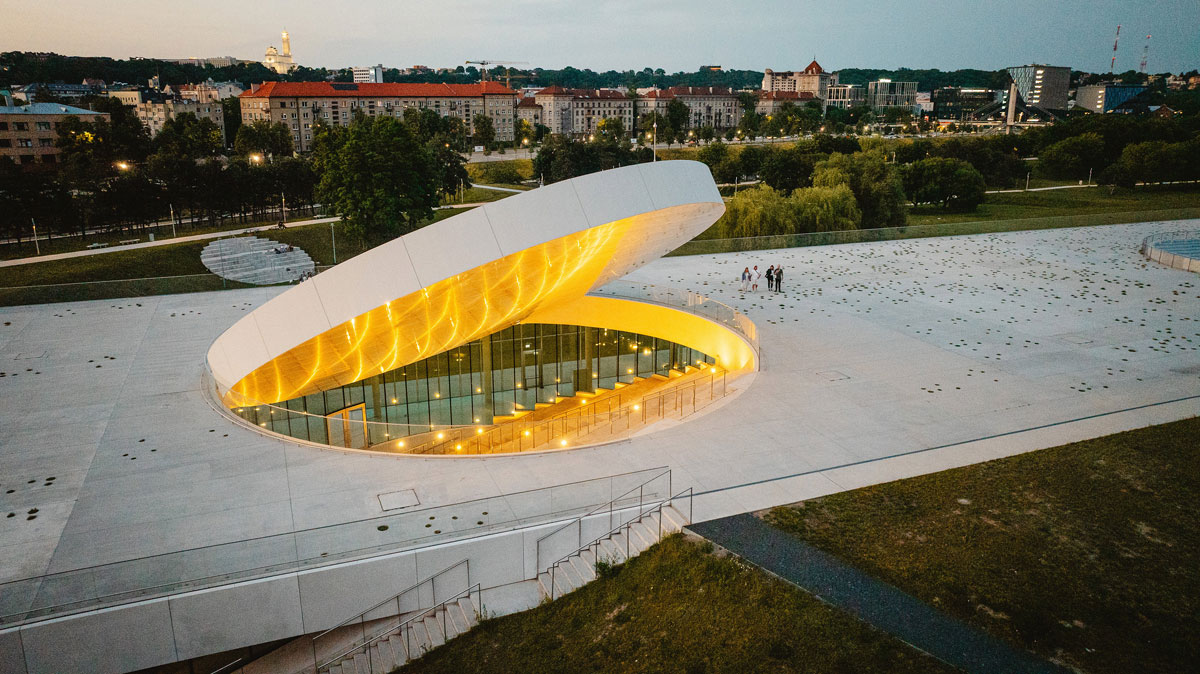 Photo by Kaunas City Municipality
Mokslo Sala (Science Island)
Karaliaus Mindaugo pr. 50, LT-44307 Kaunas
An interactive museum for children and adults, offering educational exhibitions and activities about nature, physics, technology, and innovations.
Open Tuesday to Sunday: 10:00–19:00; closed on Mondays.
To find out more about Kaunas visit: https://kaunasin.lt/en/
What to see around Kaunas
Raudondvaris Manor – A Historic Riverside Estate
Located just 10 km from Kaunas, Raudondvaris Manor is a stunning Renaissance-style estate on the banks of the Nevėžis River. Its red-brick palace, beautifully restored park, and art exhibitions offer a glimpse into Lithuania’s noble past. The site often hosts concerts, craft fairs, and seasonal festivals. Reachable by bus in around 30–40 minutes from Kaunas city centre.
Pažaislis Monastery – Baroque Beauty by the Lake
Pažaislis Monastery is one of the finest examples of Baroque architecture in the Baltic. Nestled near the Kaunas Reservoir, it offers peaceful walking paths, lake views, and a serene cultural atmosphere. The complex includes a museum and a cosy café in a historic barn. You can get there easily by city bus in about 25–30 minutes.
Birštonas – Lithuania’s Tranquil Spa Town
Nestled along the winding Nemunas River, Birštonas is Lithuania's premier spa destination, renowned for its healing mineral waters and serene natural beauty. The town boasts several renowned sanatoriums, including Tulpė, Versmė, and Eglė, which offer a range of therapeutic treatments, such as mineral baths, halotherapy, and peat pulp baths. Visitors can explore the picturesque Nemunas embankment, a 2 km trail perfect for hiking and cycling, which connects Vytautas Hill to Birštonas Central. You can get there easily by intercity bus in about 60 minutes.
Kadagių (Juniper) Valley
Kadagių Valley is a 5-hectare slope of the Kaunas Lagoon covered with naturally growing common junipers. In 2010, a 1.3 km educational walking trail was built on the edge of the cliff in the upper part of the Juniper Valley, offering panoramic views of the widening Nemunas River, Dabinta Island, and enchanting outcrops. In 2016, the Kadagiai Valley trail was recognised as the most beautiful in Lithuania. Reachable only by car.
What we recommend seeing in Lithuania
Vilnius – A Historic Capital with a Creative Soul
Vilnius, Lithuania’s capital, blends centuries of history with a vibrant modern spirit. Its UNESCO-listed Old Town features cobblestone streets, baroque churches, and cosy cafés tucked into medieval courtyards. Beyond the historical centre, explore the bohemian Užupis district—an artistic “republic” with its own constitution and quirky street art. Whether you're drawn by architecture, culture, or local cuisine, Vilnius offers a rich and welcoming experience.
Hill of Crosses – A Spiritual and Cultural Landmark
Near Šiauliai, this hill covered in over 100,000 crosses is one of Lithuania’s most iconic and mysterious sites. It symbolises national resilience and religious devotion, with crosses of all sizes placed by visitors for over 150 years. The atmosphere is quiet, emotional, and reflective. Located about 2.5 hours from Vilnius or Kaunas by car.
Druskininkai – Wellness and Nature Retreat
Druskininkai is a resort town in southern Lithuania famous for its mineral springs, spa treatments, and forest surroundings. Enjoy indoor fun at the Snow Arena, take the cable car over the Nemunas River, or unwind at a traditional Lithuanian spa. It’s about a 2-hour drive from Vilnius.
Trakai Island Castle – A Fairytale on Water
Just 30 km from Vilnius, Trakai is home to a 14th-century castle located on an island in Lake Galvė. Surrounded by lakes and forests, it’s one of Lithuania’s most picturesque and historically significant landmarks. Explore the castle museum, rent a boat, or try traditional Karaim pastries. Driving lets you explore the nearby national park and hidden lakefront trails at your own pace.
Kernavė – Lithuania’s Ancient Capital and UNESCO Heritage Site
Located just 35 km northwest of Vilnius, Kernavė offers a profound glimpse into Lithuania’s distant past. Designated a UNESCO World Heritage Site in 2004, the Kernavė Archaeological Site spans 194.4 hectares and showcases over 10,000 years of human settlement, from the Palaeolithic to the Middle Ages. The site features five impressive hill forts, ancient burial mounds, reconstructed medieval homesteads, and the remains of a 13th–14th-century town that once served as the capital of pagan Lithuania. Visitors can explore the Archaeological Site Museum, which houses nearly 28,000 artefacts, and participate in the annual “Days of Live Archaeology,” where ancient crafts, music, and traditions are brought to life.
Curonian Spit – Nature’s Masterpiece by the Sea
The Curonian Spit is a UNESCO World Heritage site known for its unique sand dunes, pine forests, and charming seaside villages. Stretching along the Baltic Sea, it offers opportunities for hiking, birdwatching, and beach relaxation. Visit the Hill of Witches in Juodkrantė and the Parnidis Dune in Nida for unforgettable views. It’s best explored by car via a short ferry ride from Klaipėda.
Žemaitija National Park and Lake Plateliai – Wild West of Lithuania
This rugged national park in northwestern Lithuania offers tranquil forests, wetlands, and the stunning Lake Plateliai. It’s a great spot for kayaking, hiking, or exploring Cold War history at the Plokštinė missile base museum. Small villages, wooden churches, and scenic viewpoints add to the charm. A car is essential for reaching remote spots and enjoying the full experience.

